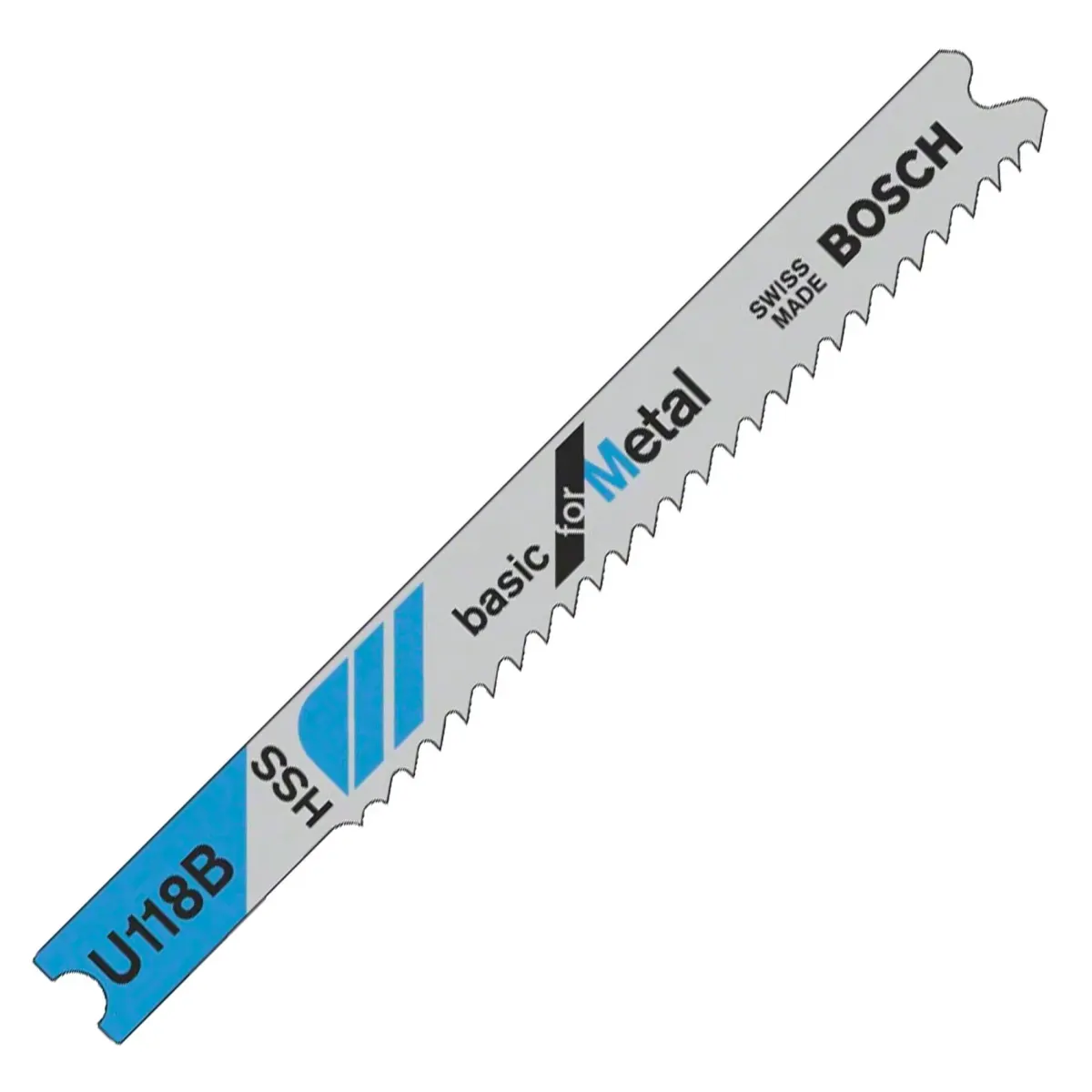
T-Shank vs. U-Shank Jigsaw Blades: Differences & Compatibility
Understand why the power tool industry standardized on T-shank blades and whether older U-shank blades fit your saw.
Published by: Sierras de CalarLast reviewed on ◷ 1 min estimated read
Standing in the hardware store aisle, you will see two distinct jigsaw blade shanks: T-shank and U-shank. Understanding their differences will prevent frustrating compatibility issues.
Invented by Bosch and now adopted as the universal global standard, the T-shank features two pronounced lateral tangs (wings) near the top of the shank:
Keyless Locking: Spring-loaded internal locking jaws snap behind the tangs, securing the blade mechanically with zero screws.
Superior Clamping Force: The tangs prevent the blade from pulling out during aggressive orbital cutting.
Used By: 99% of modern saws, including DEWALT, Milwaukee, Bosch, Makita, Craftsman, Skil, Ridgid, and Ryobi.
What is a U-Shank (Universal Shank)?
The older legacy American standard. Features a rounded U-shaped top notch and often a central mounting hole:
Fastened by Screws: Relies on a set screw tightened with an Allen wrench to clamp the blade against the shaft.
Drawbacks: Requires carrying an Allen key; set screws can vibrate loose during heavy cuts.
The Bottom Line for Woodworkers
If you own any jigsaw made in the last 15 years, buy T-shank blades exclusively. They are universally available, change in 2 seconds, and offer vastly superior blade varieties.
Can I use a U-shank blade in a modern quick-release jigsaw?
Almost never. Modern automatic tool-free chucks require the side retention tangs of a T-shank to lock into place. U-shank blades will slip out under cutting load.
Why did the tool industry switch from U-shank to T-shank?
Bosch invented the T-shank to enable tool-free, lever-operated blade changes that eliminate loose set screws and allen keys while providing higher clamping force.