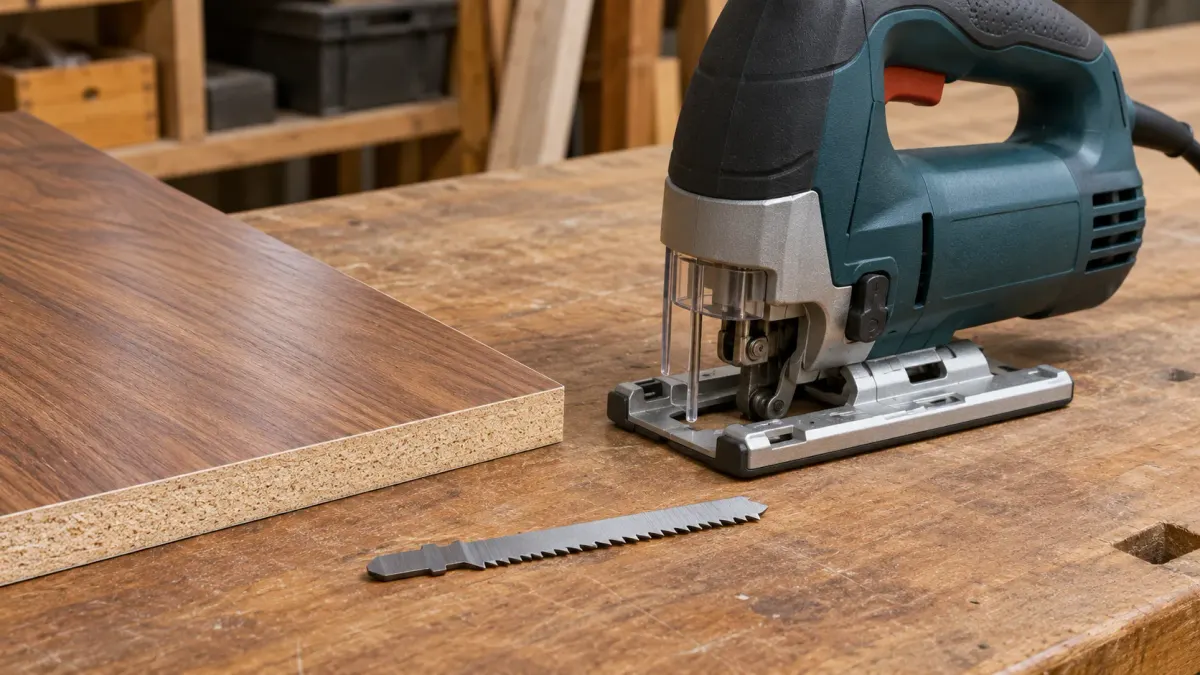
Reverse-Tooth Jigsaw Blades: How Down-Cut Blades Work
Learn how downward-cutting jigsaw blades produce razor-clean cuts on the visible top face of countertops and flooring.
Published by: Sierras de CalarLast reviewed on ◷ 1 min estimated read
Standard jigsaw blades cut on the upstroke, shredding delicate surface veneers. Reverse-tooth down-cut blades reverse the physics, giving you flawless top-face finishes.
On standard jigsaw blades, the teeth point upward toward the tool handle, cutting as the reciprocating plunger pulls upward.
A reverse-tooth blade (most famously the Bosch T 101 BR) features teeth that point downward toward the floor. They cut exclusively on the downstroke, slicing wood and laminate fibers inward toward the core rather than lifting them into the air.
The Trade-Off: Upward Tool Lift
Because cutting force is directed downward, Newton’s third law pushes the jigsaw upward. To master a reverse blade:
Maintain Firm Downward Hand Pressure: Keep the base shoe firmly planted on the workpiece. If you relax your grip, the saw will chatter and hop.
Turn Orbital Action Completely OFF (Setting 0): Orbital swing conflicts with downward-cutting tooth geometry.
Clamp Your Workpiece Securely: Ensure thin boards are clamped tightly so they do not vibrate against the sawhorses.
Top Applications for Down-Cut Blades
Drop-in kitchen sink cutouts on installed laminate countertops.
Trimming pre-hung interior door bottoms without splintering face veneers.
Cutting luxury vinyl flooring (LVP) and laminate planks decorative-side-up.
Why does my jigsaw chatter and jump with a reverse blade?
Because the teeth cut downward on the downstroke, cutting resistance pushes the jigsaw body upward off the workpiece. You must maintain firm, steady downward shoe pressure.
When should I choose a reverse-tooth blade over a standard blade?
Use reverse blades whenever cutting postform laminate countertops, pre-finished cabinetry, or luxury vinyl plank (LVP) where you must cut with the decorative face UP.