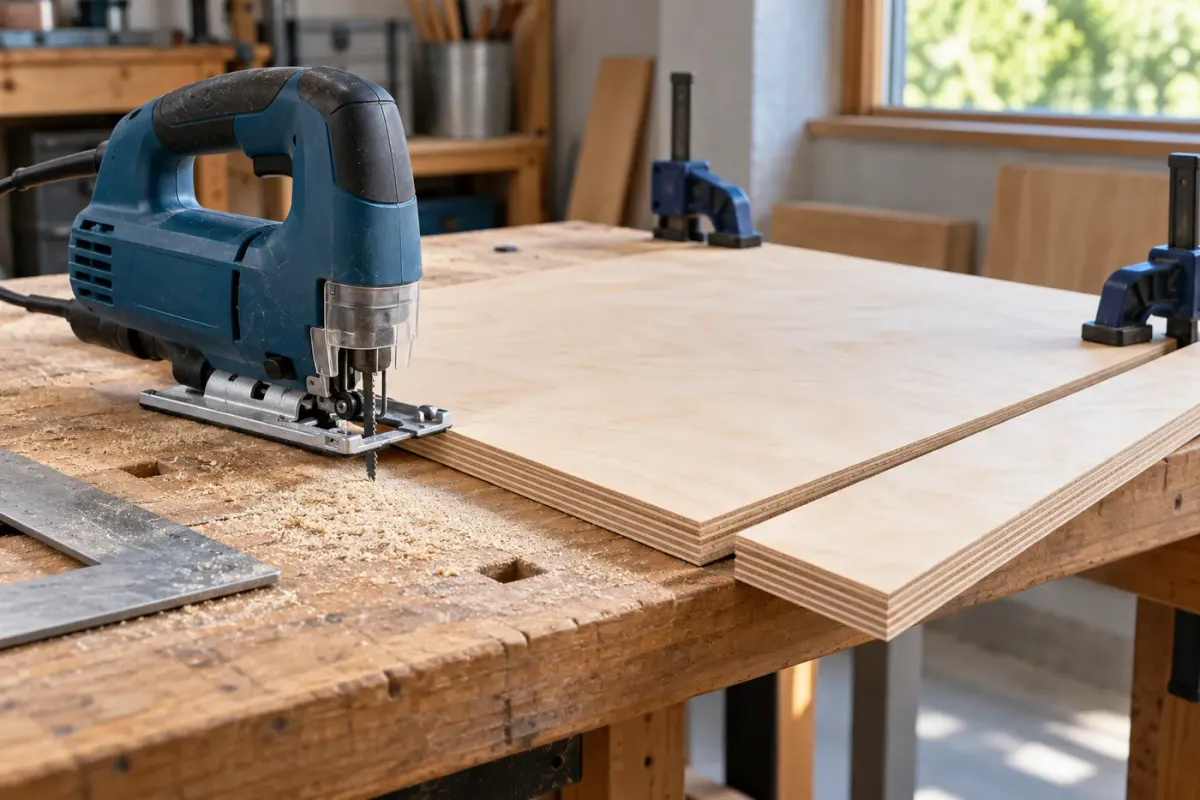
Why Plywood Splinters So Easily
Plywood consists of thin cross-laminated wood veneers glued together under pressure. Because standard jigsaw blades cut on the upstroke, the upward-facing teeth emerge violently through the top veneer, lifting and tearing the delicate wood fibers.
4 Pro Techniques for Chip-Free Plywood Cuts
1. Match Your Blade to Your Cutting Face
- Standard Up-Cut Blades (e.g., Bosch T 101 B): Always lay your plywood decorative face DOWN on the sawhorses. The teeth enter the good face cleanly from underneath and exit harmlessly on the rough back.
- Reverse Down-Cut Blades (e.g., Bosch T 101 BR): Cut with your good face UP. The downward-facing teeth push fibers into the core rather than lifting them.
2. The Blue Painter’s Tape Method
Firmly burnish high-tack blue painter’s tape directly over your marked cut line on both sides of the panel. The tape adhesive supports the surface fibers during tooth exit, virtually eliminating micro-chipping.
3. Pre-Score the Veneer with a Utility Knife
For showpiece furniture projects, clamp an aluminum straightedge along your line and score the top veneer lightly with a fresh utility knife blade. When the jigsaw blade cuts through, the fibers cleanly break at the scored incision.
4. Install an Anti-Splinter Insert
Most pro jigsaws (such as the DEWALT DCS334B or Bosch JS470E) include a clear zero-clearance plastic insert that snaps directly around the blade in the shoe plate, holding the wood fibers firmly flat during the stroke.
Browse compatible Wood Jigsaw Blades and read our Melamine Cutting Guide.