How to Cut Melamine and Double-Sided Laminate Without Chipping
Discover the exact blade choices, scoring techniques, and machine setup required to achieve splinter-free edges on white melamine boards.
Published by: Sierras de CalarLast reviewed on ◷ 2 min estimated read
Melamine board is famous in custom cabinetry for being durable, waterproof, and notoriously fragile to cut. Because the brittle melamine resin coating is only a fraction of a millimeter thick, standard jigsaw blades shatter the edge into ragged white chips.
Melamine board is famous in custom cabinetry for being durable, waterproof, and notoriously fragile to cut. Because the brittle melamine resin coating is only a fraction of a millimeter thick, standard jigsaw blades shatter the edge into ragged white chips that ruin shelf edges and cabinet faces.
Achieving cabinet-maker-quality, chip-free cuts with a handheld jigsaw is entirely possible once you eliminate the mechanical causes of surface tear-out.
The 4 Steps to 100% Chip-Free Melamine Cuts
1. Score the Cut Line with a Utility Knife
Clamping an aluminum straightedge along your line, score the brittle melamine resin coating lightly with a fresh razor blade or marking knife. Severing the surface film prior to sawing prevents tear-out fractures from propagating past the cut line.
2. Apply Painter’s Tape Firmly
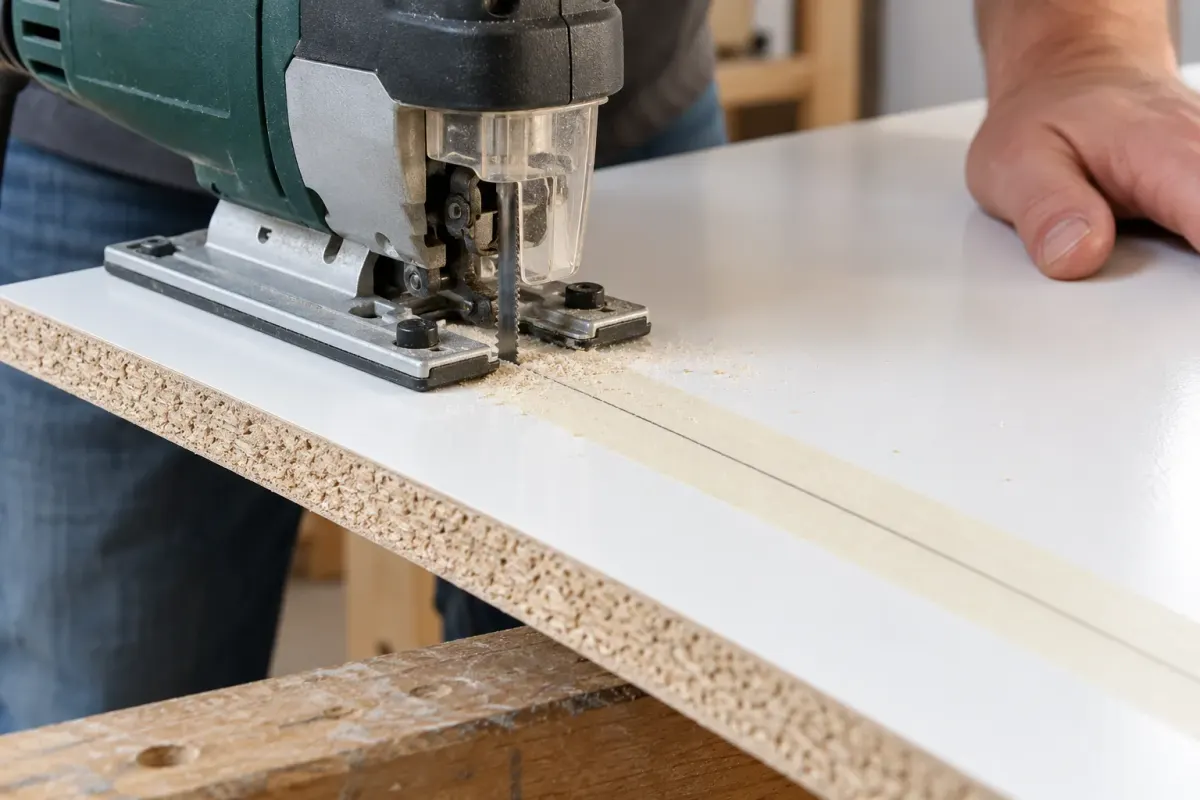
Lay heavy-duty blue painter’s tape along the cut path on both the top and bottom faces of the board. Burnish the tape down with the back of a fingernail or wooden block to ensure intimate contact with the surface.
3. Choose the Right Blade Geometry
For Cutting Both Faces Cleanly (Double-Sided): Mount the Bosch EXPERT T308B (Clean for Hardwood / Laminates). This revolutionary blade features two distinct tooth sets: the top teeth cut downward, while the bottom teeth cut upward, pulling wood fibers toward the board center and leaving both faces 100% chip-free.
For Cutting Face-Up with Single-Sided Down-Cut: Use the Bosch T101BR (Reverse Tooth).
For Standard Up-Cut Blades: If using standard blades like the Bosch T101B, you must flip the board and cut with the decorative face facing down against the workbench.
Orbital Pendulum: 0 (Strictly Off). Never engage pendulum motion on melamine or pre-finished veneered plywood.
Stroke Speed: Setting 4 or 5. A fast stroke speed combined with a slow, controlled forward feed prevents the teeth from hammering the resin edges.
Install a Splinter Guard: Snap your jigsaw’s clear plastic anti-splinter shoe insert into place around the blade to hold down the board fibers right at the kerf line.
Frequently Asked Questions
Does blue painter's tape really stop melamine from chipping?
Painter's tape helps by holding the brittle surface fibers in place against lateral vibration, but tape alone cannot overcome the aggressive upstroke tear-out of a coarse blade. For zero chip-out, tape must be paired with zero orbital action and a blade engineered with fine downward-cutting teeth.
What is the best jigsaw blade for melamine?
The Bosch EXPERT '2-Side Clean' T308B is the gold standard for melamine and double-faced veneers. It features dual rows of precision-ground teeth pointing in opposing directions, cutting simultaneously down from the top face and up from the bottom face for flawless edges on both sides.
Can a zero-clearance splinter guard insert help?
Yes, tremendously. Most pro jigsaws include clear plastic zero-clearance anti-splinter inserts that snap into the baseplate shoe directly surrounding the blade. This holds down the melamine veneer fibers right at the exact point of tooth exit.