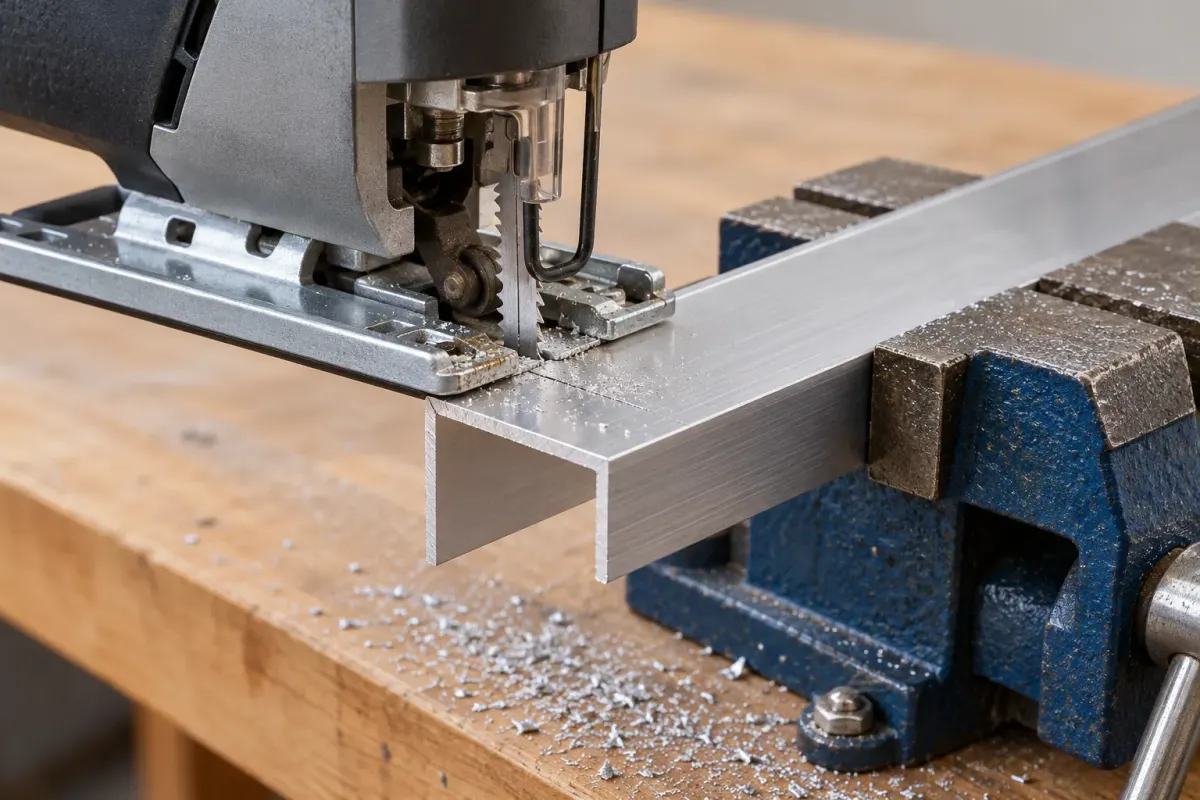
Why Aluminum Gums Up Standard Blades
Aluminum is non-ferrous and ductile. When cut dry with fine-tooth steel blades, frictional heat quickly softens the chips, causing them to pack tightly into the blade gullets. Once clogged, the blade rubs rather than cuts, generating immense heat and snapping.
Essential Setup for Cutting Aluminum
- Dedicated Aluminum Blades: Choose blades engineered specifically for non-ferrous metals, such as the Bosch T 127 D. They feature medium-spaced teeth (8 TPI) with deep chip gullets that evacuate metal shavings before they fuse.
- Apply Cutting Lubricant: Coat both sides of the blade with beeswax, a wax lubricant stick, or light machine oil before beginning the cut.
- Turn Orbital Action OFF (Setting 0): Keep the pendulum swing strictly at 0. Forward orbital thrust slams teeth into metal, causing blade kickback and chatter.
- Moderate Stroke Speed: Set your variable speed dial to medium (1,500 to 2,200 SPM). Running at full 3,200 SPM creates excessive friction.
- Clamp Between Sacrificial Plywood: When cutting thin aluminum sheet (under 1/8 in.), sandwich the sheet between two thin plywood scraps to prevent edge curling and warping.
Browse our Metal Cutting Blades and read our guide on Cutting Sheet Metal.