How to Maximize Dust Extraction on a Jigsaw: Workshop Cleanliness Guide

Connect shop vacuums properly, configure dust blower selector switches, and control harmful airborne wood dust when cutting with a jigsaw.

Published by: Sierras de CalarLast reviewed on 2 min estimated read
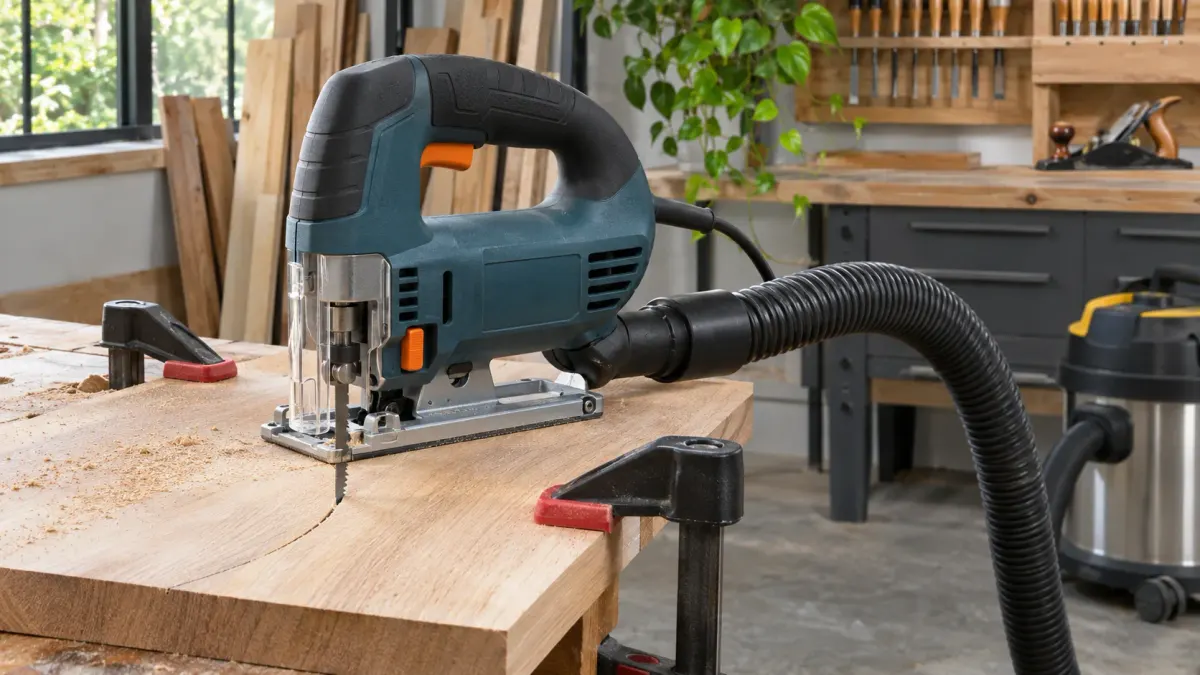
Professional jigsaw connected to a vacuum hose cutting wood cleanly without airborne dust

Cutting MDF, particleboard, or exotic hardwoods with a jigsaw produces dense clouds of fine respirable dust. Without active extraction, sawdust covers your layout lines and fills your workshop air.

Table of Contents View sections
  1. 1. Dust Port Connections & Universal Hose Adapters
  2. 2. Toggle the Front Blower OFF When Connected to Vacuum
  3. 3. Drop the Clear Protective Shroud Down
  4. Frequently Asked Questions

Cutting MDF, particleboard, or exotic hardwoods with a jigsaw produces dense clouds of fine respirable dust. Without active extraction, sawdust covers your layout lines, blinds your visibility, and fills your workshop air with fine particulate.

By pairing your jigsaw’s built-in extraction channel with a shop vac, installing chip shrouds, and configuring air-flow switches properly, you can achieve clean indoor cuts with almost zero cleanup.

1. Dust Port Connections & Universal Hose Adapters

Most jigsaws feature a 1-inch to 1-3/8” rear exhaust port built directly into or snapping onto the cast aluminum baseplate.

  • Dedicated Vac Adapters: If your shop vac has a standard 1-1/4” or 2-1/2” hose, pick up a stepped rubber vacuum adapter to create an airtight seal without pinching or restricting airflow.
  • Hose Management: Always suspend your vacuum hose from an overhead boom arm or hook it to your belt so the weight of the hose does not drag down the back of the jigsaw and tilt your bevel.
Check Universal Vacuum Adapters on Amazon US ↗

2. Toggle the Front Blower OFF When Connected to Vacuum

A frequent user mistake is leaving the tool’s integrated dust blower active while connected to a vacuum cleaner. The front blower channels engine cooling air forward across the blade to blow sawdust off the pencil line. When a vacuum is attached, this blast of air directly opposes the vacuum’s suction, dispersing dust out the sides of the shoe. Flip the blower lever to the “Extraction” or “0” position.

3. Drop the Clear Protective Shroud Down

The clear polycarbonate shield included with your saw is not just an OSHA safety guard—it is an aerodynamic suction funnel. Lowering the shroud creates a sealed negative-pressure zone right around the blade kerf, channeling up to 90% of flying chips straight into the baseplate exhaust channel.

Frequently Asked Questions

Does hooking up a shop vacuum capture 100% of jigsaw dust?

No handheld tool achieves 100% dust containment due to open blade mechanics, but an optimized dust shroud and shop vac setup captures between 85% and 92% of fine particulate. It keeps cut lines visible and prevents toxic MDF resin dust from lingering in the air.

Should I keep the built-in dust blower turned ON when using a vacuum?

No. Modern professional jigsaws include a toggle switch between the front cutline dust blower and rear vacuum extraction. If you connect a vacuum hose, you must toggle the front blower OFF; otherwise, the pressurized air stream scatters dust across the room before the rear vacuum port can capture it.

What is the plastic clear shield on the front of the jigsaw for?

The transparent plastic blade guard serves as a dust containment cowl. When dropped down against the board, it creates a localized low-pressure chamber that directs the rushing air straight through the baseplate channel and into the vacuum hose.

Back to Guides Overview