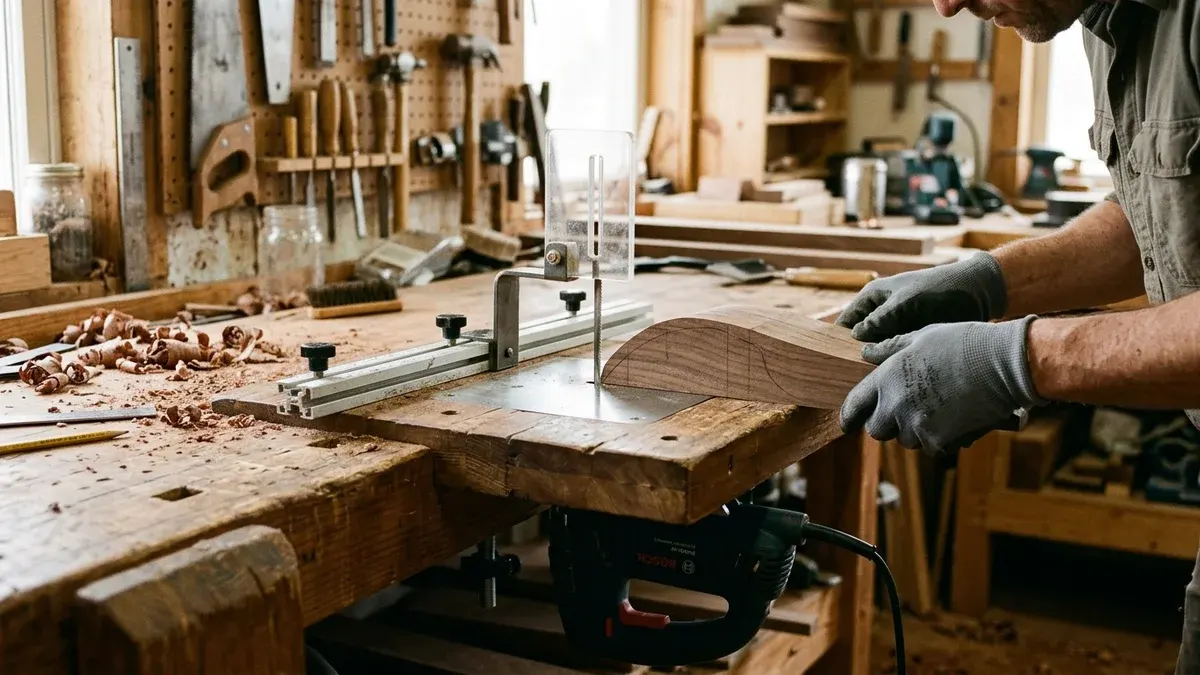
Inverted Jigsaw Tables: Pros, Cons, and Crucial Safety Guidelines
Mounting a jigsaw under a table turns it into a pseudo scroll saw, but demands strict safety protocols.
Published by: Sierras de CalarLast reviewed on ◷ 1 min estimated read
Mounting a jigsaw upside down under a workbench insert plate is a popular DIY project for cutting intricate craft scrollwork with both hands free. But is it safe?
Mounting a jigsaw inverted beneath a tabletop plate offers several enticing advantages:
Two-Handed Workpiece Control: Both hands remain on small, intricate workpieces for precise steering along curved lines.
Superior Line-of-Cut Visibility: Looking down directly onto the top face of the board makes following pencil lines easier.
Tear-Out on the Underside: Because standard blades cut toward the tool body, the good face remains pristine on top.
Severe Drawbacks and Inherent Risks
Blade Deflection: Without an overhead blade guide with roller bearings, standard blades will deflect and bevel out of square when pushing timber sideways.
Safety Hazards: The tool trigger must be locked on, meaning a kickback or slip puts fingers in direct line with an unguarded moving blade. Always install an emergency paddle shutoff switch.
Dust Intrusion: Inverted mounting dumps heavy sawdust directly down into the motor cooling vents, rapidly overheating standard tools.
Safer Workshop Alternatives
If you do high-volume intricate scrolling, invest in a dedicated scroll saw or use a bandsaw with a 1/8-inch blade. If using an inverted table, always install an overhead guide arm with guide bearings.
Is an inverted jigsaw table as good as a dedicated scroll saw?
No. Jigsaw blades lack upper pin tension and flex under side load. A dedicated scroll saw uses ultra-thin tensioned blades designed for micro-intricate marquetry.
What is the biggest safety risk of an inverted jigsaw?
The exposed blade reciprocates directly upward toward your hands without a standard blade guard or drop shield. You must use push blocks and never wear loose gloves.