Mechanics of Up-Cut vs. Down-Cut Blades
To master reverse-tooth cutting in cabinetmaking and finish carpentry:
- Conventional Up-Cut Blades: Teeth point upward toward the jigsaw body. As the connecting rod pulls upward, teeth pull the workpiece tight against the jigsaw shoe. This provides safe, stable tracking but blows out delicate surface veneers on the upward exit path.
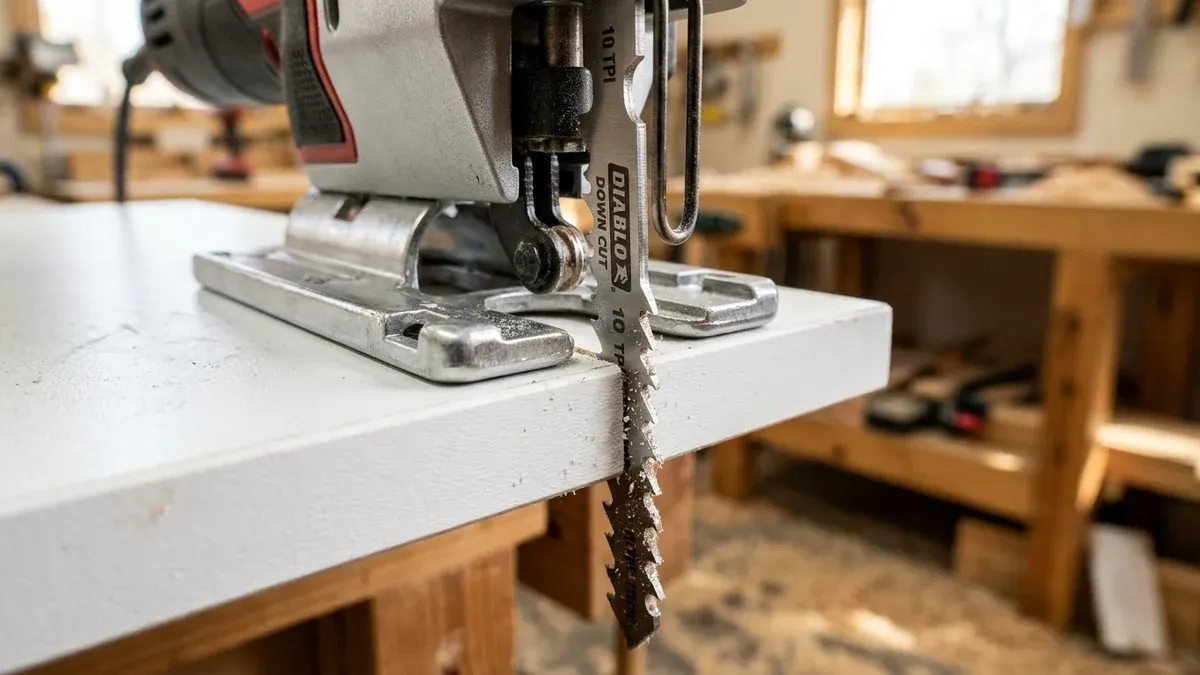
- Reverse Down-Cut Blades: Teeth point downward toward the floor. The shearing action occurs on the downward push stroke. The visible upper face stays flawless because wood fibers are compressed inward against the dense composite core, expelling minor tear-out harmlessly out the unseen underside.
Mandatory Workbench Techniques and Operating Rules
Operating a down-cut jigsaw blade safely demands distinct user habits:
- Continuous Downward Feed Pressure: Because cutting force pushes the machine upward, the operator must exert positive, continuous downward body weight through the barrel grip or top handle. Hesitating or lightening your grip causes the shoe to chatter off the panel surface.
- Zero Orbital Action (Setting 0): Pendulum mechanisms advance the blade horizontally on the upstroke. Combining this with downward teeth causes the blade to slam into the kerf wall at an opposing angle, ruining teeth and ruining the cut line.
- Never Attempt Plunge Cuts: Touching a spinning reverse blade tip to flat stock instantly induces violent rearward kickback. Always drill a clean 3/8” (10 mm) pilot entry hole inside waste areas.
Comparison of the Best Down-Cut Jigsaw Blades
| Blade Model | Teeth / Pitch | Blade Length | Construction | Tooth Profile | Recommended Applications |
|---|---|---|---|---|---|
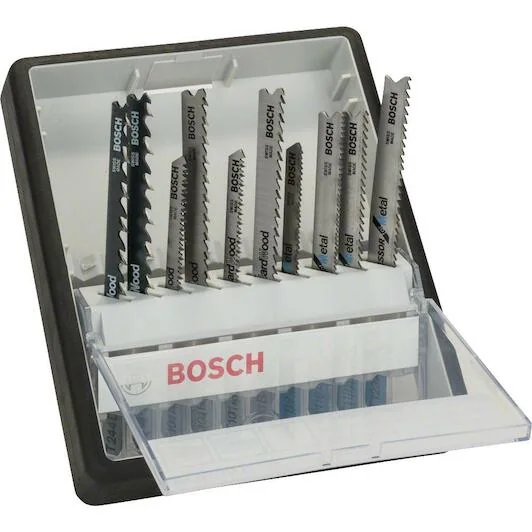
| Bosch T 101 BR Clean for Wood | 10 TPI / 2.5 mm | 4” (100 mm) | High-Carbon Steel (HCS) | Taper-ground dorsal relief | Kitchen cabinets, melamine, veneer |
| Bosch T 101 BIF Special for Laminate | 15 TPI / 1.7 mm | 3-1/4” (83 mm) | Bi-Metal (BIM) | Fine ground reverse pitch | High-pressure laminate (HPL) & CPL |
| Festool S 75/2.5 R | 10 TPI / 2.5 mm | 3” (75 mm) | High-alloy HCS | Reverse conically ground | Fine architectural veneered plywood |
| Diablo DJT101BR | 10 TPI | 4” (100 mm) | Matrix II Steel | Induction-hardened teeth | Fast, splinter-free jobsite installs |
View Bosch T101BR Reverse Blades on Amazon →
Pro Workshop Tips for Factory-Grade Edges
- Control Your Forward Feed Rate: Allow the downward-shearing teeth to slice at their own cadence. Forcing the tool forward causes the blade to flex backward, leading to out-of-square beveled cut edges.
- Unobstructed Cut Line Visibility: Because sawdust is evacuated downward beneath the workbench, your pencil or scribed knife line remains completely clean and visible without needing an active air blower.