The Thermodynamics of Cutting Acrylic: Why Plastic Melts
Polymethyl methacrylate (PMMA), widely known as Plexiglas, Lucite, or Perspex, has a glass transition temperature of approximately 105 °C (221 °F). A conventional metal-cutting jigsaw blade running at full stroke speed generates localized interface temperatures exceeding 160 °C (320 °F) in less than five seconds of continuous cutting.
When friction spikes:
- Shavings soften into a gummy paste rather than snapping off cleanly.
- Molten resin clogs the gullets between teeth, choking chip evacuation.
- The kerf reseals and re-welds itself immediately behind the reciprocating blade shoe.
- The blade binds, causing violent vibration that shatters brittle sheets.
To prevent this catastrophic failure chain, a dedicated acrylic jigsaw blade requires three specific mechanical attributes: taper-ground body relief (eliminating sidewall friction), neutral to slightly negative rake angles, and bimetal or carbide alloys engineered for superior thermal dissipation.
Technical Comparison of Leading Acrylic Jigsaw Blades
| Blade Model | Teeth / Pitch | Working Length | Tooth Material | Optimal Thickness | Edge Quality |
|---|---|---|---|---|---|
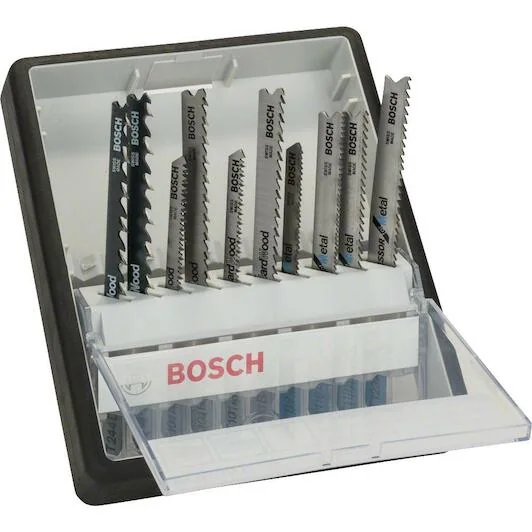
| Bosch T 102 BF Clean for PMMA | 14 TPI / 1.8 mm | 2-5/8” (67 mm) | Bi-Metal (BIM) | 5/64” to 3/4” (2-20 mm) | Near-polished optical edge |
| Festool HS 75/2.5 bi Plastic | 10 TPI / 2.5 mm | 3” (75 mm) | HSS Bi-Metal | Up to 1-3/16” (30 mm) | Crisp, rapid cut in solid plastics |
| Diablo DJT102BF Acrylic | 14 TPI variable | 3” (76 mm) | Matrix II Bi-Metal | 1/16” to 1/2” (2-13 mm) | Non-stick thermal Perma-SHIELD coating |
| Bosch T 108 BHM Clean Plastic | 11 TPI / 2.2 mm | 2-5/8” (67 mm) | Tungsten Carbide (HM) | Abrasive & composite plastics | 20x lifespan in reinforced polymers |
View Bosch T102BF Acrylic Blades on Amazon →
Cast Acrylic vs. Extruded Acrylic Behavior
Understanding your plastic stock is as important as choosing the blade:
- Cast Acrylic (GS): Manufactured by pouring liquid monomer between tempered glass plates. It has a higher molecular weight, superior heat resistance, and machines crisp powdery swarf that evacuates effortlessly with the Bosch T 102 BF.
- Extruded Acrylic (XT): Rolled continuously on industrial extruders. It has a lower melting threshold and higher internal residual tension. It softens rapidly and requires lower machine speeds and occasional misting with soapy water or cutting lubricant.
Mandatory Jigsaw Settings for Flawless Edge Finishes
- Orbital pendulum mode: Set strictly to 0. Pendulum motion punches the blade forward into brittle sheet edges, causing instantaneous spider-web cracking.
- Stroke rate: Dial speed down to 40-50% (speed setting 2 or 3 on variable triggers).
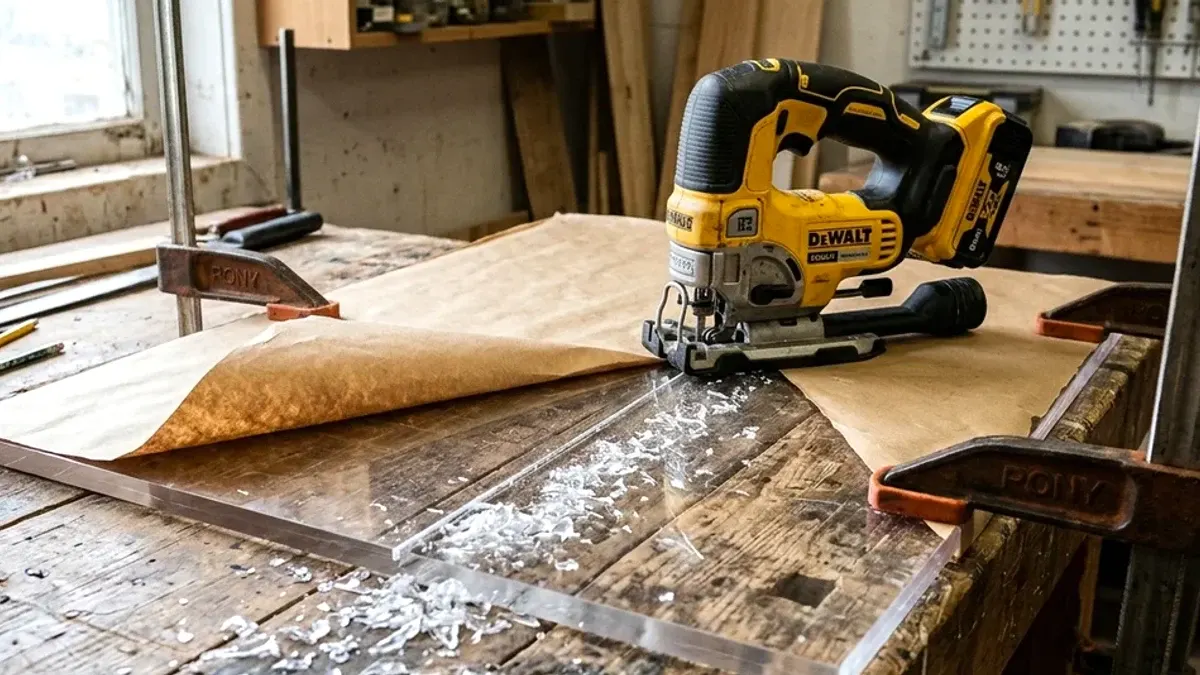
- Sub-base protection: Cover your jigsaw metal shoe with painter tape or clip on an anti-scratch plastic sub-base to prevent dulling scratches across polished acrylic.
- Sacrificial clamping: Clamp the acrylic sheet securely between scrap MDF or plywood battens close to the cut line to damp out high-frequency vibrations.