PPE and Safety Gear Guide for Jigsaw Cutting: Workshop Standards and Best Practices
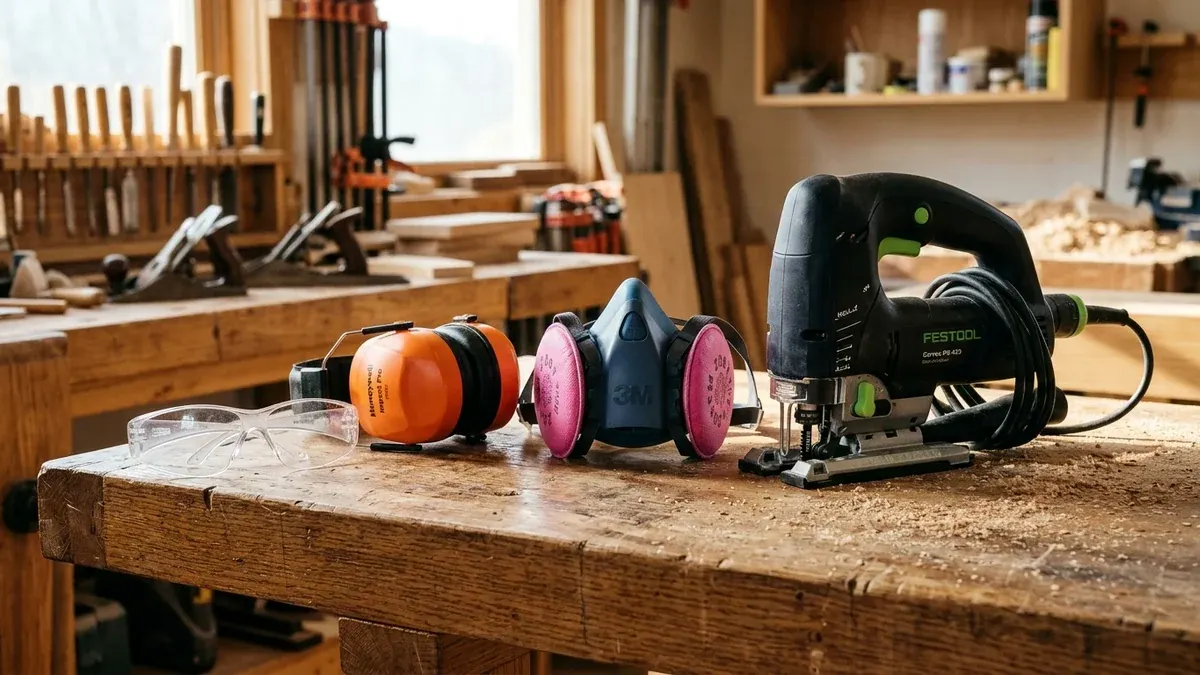
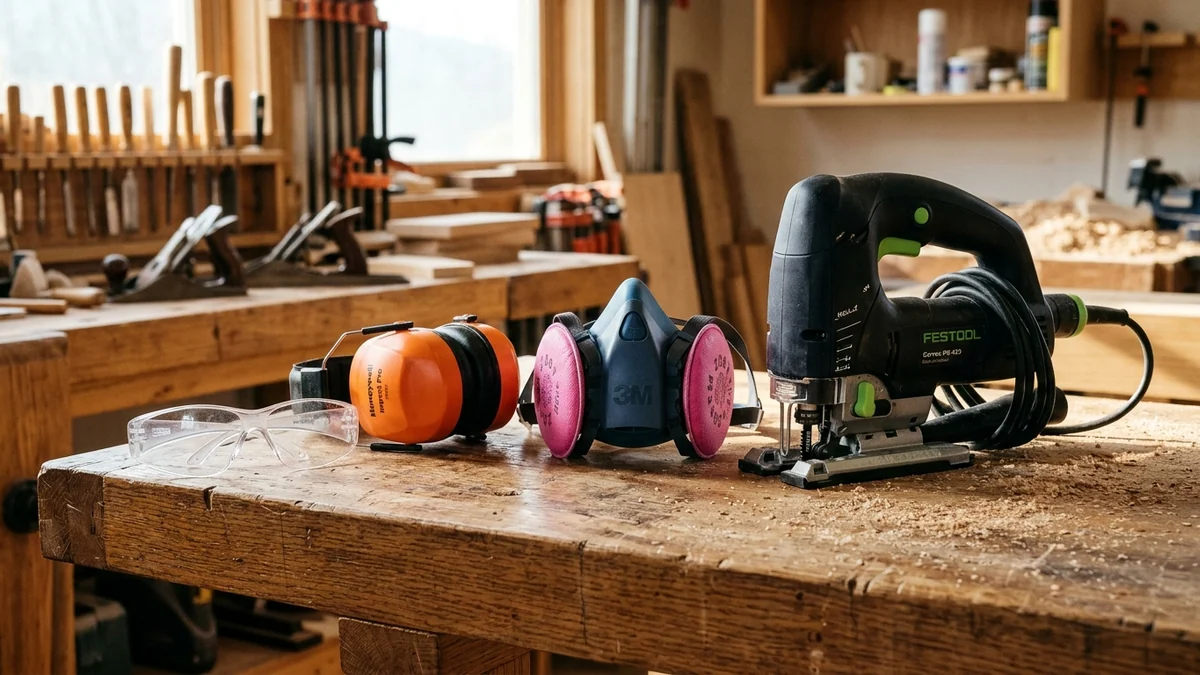
Essential protective gear for jigsaw operation: eye protection against blade fractures, respiratory defense for MDF dust, and high-noise hearing safeguards.
Published by: Sierras de CalarLast reviewed on ◷ 2 min estimated read
While jigsaws are frequently viewed as forgiving, approachable benchtop power tools, their reciprocating blades cycle at more than 3,000 strokes per minute. Catastrophic blade fracture, respirable fine dust from MDF formaldehyde binders, and cutting decibel levels exceeding 95 dBA demand an uncompromised personal protective equipment (PPE) routine.
Compared to miter saws or table saws, jigsaw risks are routinely underestimated:
High-Velocity Blade Fragmentation: When high-carbon steel blades overheat or deflect during tight contour turns, the tempered shank can shear abruptly, firing high-speed steel shards toward the operator’s face at upwards of 40 mph (65 km/h).
Toxic Respirable Particulates: Cutting MDF, plywood, or particleboard releases clouds of micron-sized dust saturated with urea-formaldehyde adhesives. Hardwood sawdust is also officially classified as a human carcinogen by occupational health organizations.
High-Frequency Decibel Spikes: Slicing corrugated metal roofing or hollow steel tubing generates continuous piercing resonant frequencies well beyond 100 dBA, destroying hair cells in the cochlea without adequate hearing defenders.
Workshop PPE Selection Guide and Certification Standards
PPE Category
Standard / Certification
Recommended Gear
Critical Function
Eye Defense
ANSI Z87.1+ / EN 166 1B
Wraparound polycarbonate goggles with side shields
The Hidden Trap of Wearing Gloves Near Reciprocating Tools
One of the most dangerous workbench mistakes is donning thick leather rigger or gardening gloves while operating a jigsaw. If loose leather or dangling cuff fabric contacts the reciprocating shaft or lower blade teeth, the fabric gets dragged into the tool mechanism instantly at 50 cycles per second.
Golden Rule: Cut with bare, dry hands keeping both hands placed securely on the jigsaw handles and guide knob; or wear skin-tight micro-foam gloves with zero slack. Reserve heavy cut-resistant gloves exclusively for swapping red-hot spent blades or moving raw sheet metal.
Active Shop Vac Extraction: Upgrading Your Air Quality
The single most effective health upgrade for jigsaw cutting is utilizing the onboard dust extraction nozzle. Linking your saw to a Class M or HEPA workshop vacuum captures over 80% of airborne particulate matter at the source, preventing shop-wide contamination and maintaining full visibility of your cut line.
Frequently Asked Questions
Why is wearing loose work gloves dangerous when running a jigsaw?
Loose fabric, oversized leather gloves, or fraying cuffs can catch in the reciprocating chuck or blade teeth in milliseconds, drawing fingers into the blade before the trigger can be released.
What respiratory protection is required when cutting sheet goods like MDF or particleboard?
Wear a well-fitted N95, FFP2, or FFP3 rated respirator. Hardwood dust (such as oak or beech) is a known Category 1 carcinogen, and vaporized formaldehyde resin from composite boards irritates mucous membranes.
Does a jigsaw cut loud enough to cause permanent hearing damage?
Yes. While idling around 82 dBA, cutting through sheet metal, dense laminates, or solid oak worktops routinely exceeds 94 to 98 dBA, quickly crossing the 85 dBA threshold for irreversible noise-induced hearing loss.